-
Title
-
Force Table
-
History / Usage
-
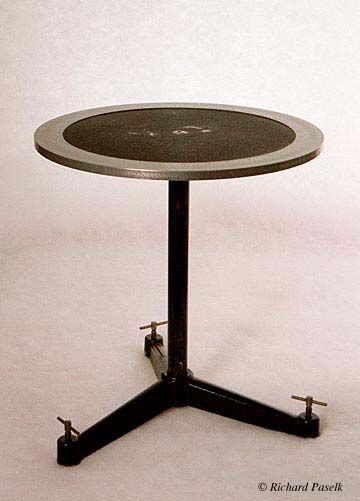
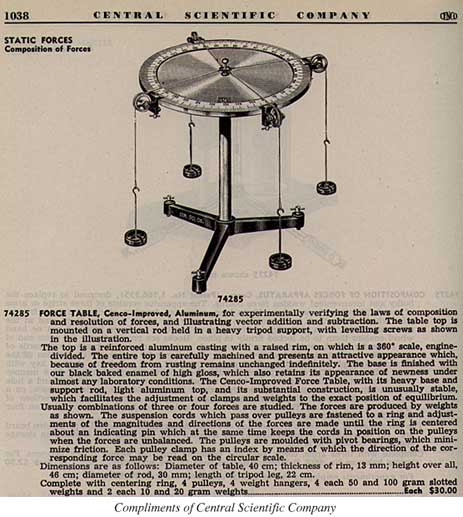
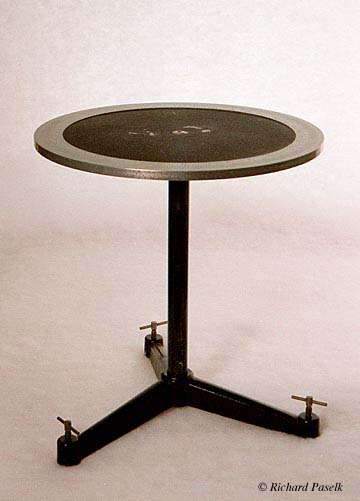
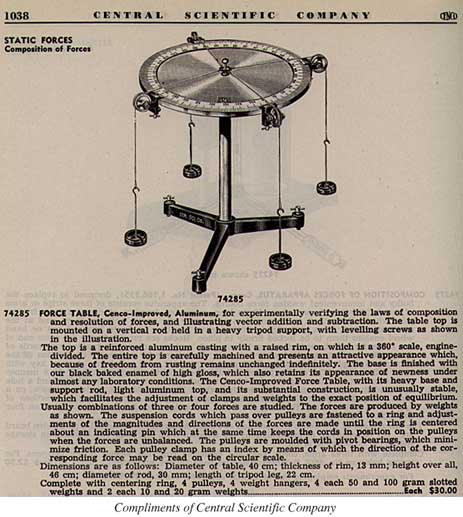
Used to experimentally demonstrate/verify the laws of composition and resolution of forces via vector addition and subtraction. When the angles and forces (added weights) are correct the central ring will center on the center post in the table.
-
Description
-
The instrument has a 15.5" diameter cast aluminum plate, 0.5" thick at the rim, with reinforcing ribs beneath. There is a machined, slightly raised rim 1.5 inches wide around the outside on which a 360° engine divided scale is inscribed. The inner portion of the plate is black crinkle-finished, with a nickel-plated brass insert with a 0.25" hole in the center. The plate is held on a 1 1/8" diameter steel rod which threads into a heavy cast-iron tripod base with nickel-plated brass leveling-screw feet on each leg. The rod and base are finished in heavy black enamel. The tripod legs of the base are 8.5" long. The overall height (minimum) is 17". A brass tag is pinned beneath the rim near the outer edge: HUMBOLDT S-T-C 2689. There is a Cenco decal on one of the tripod legs.
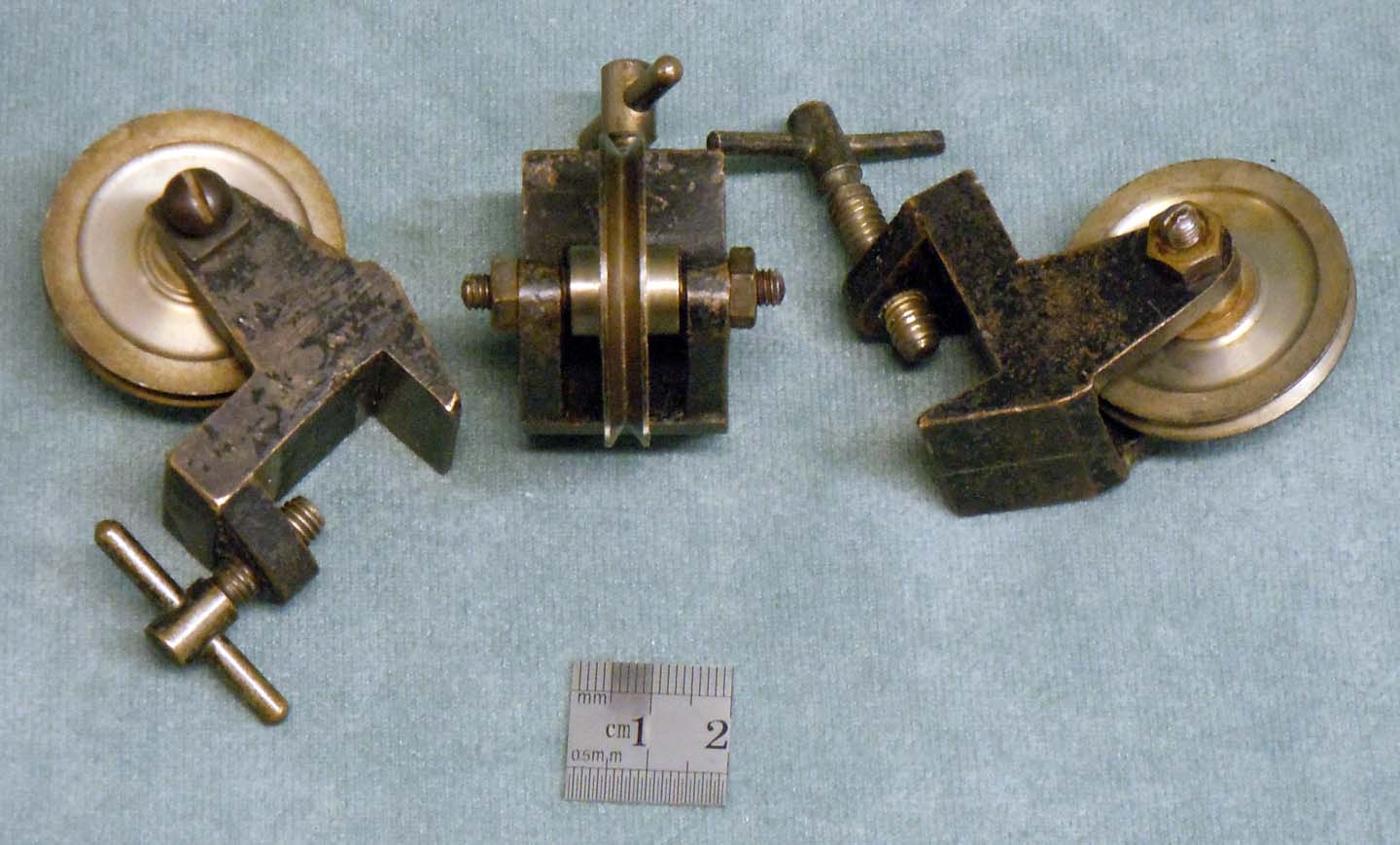
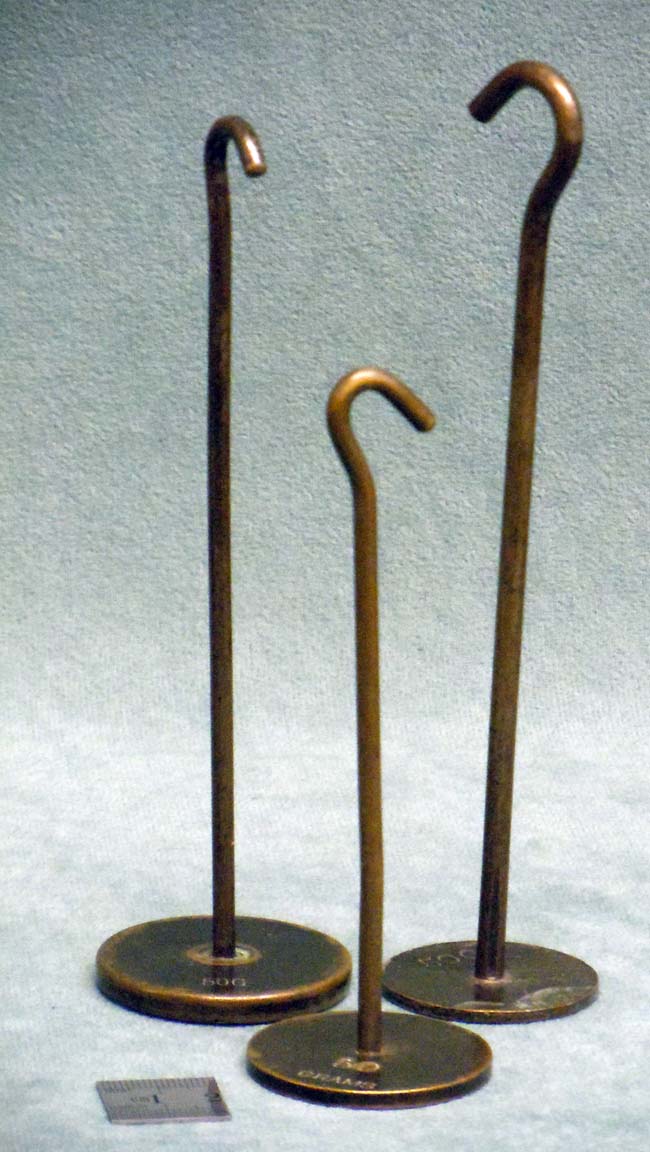
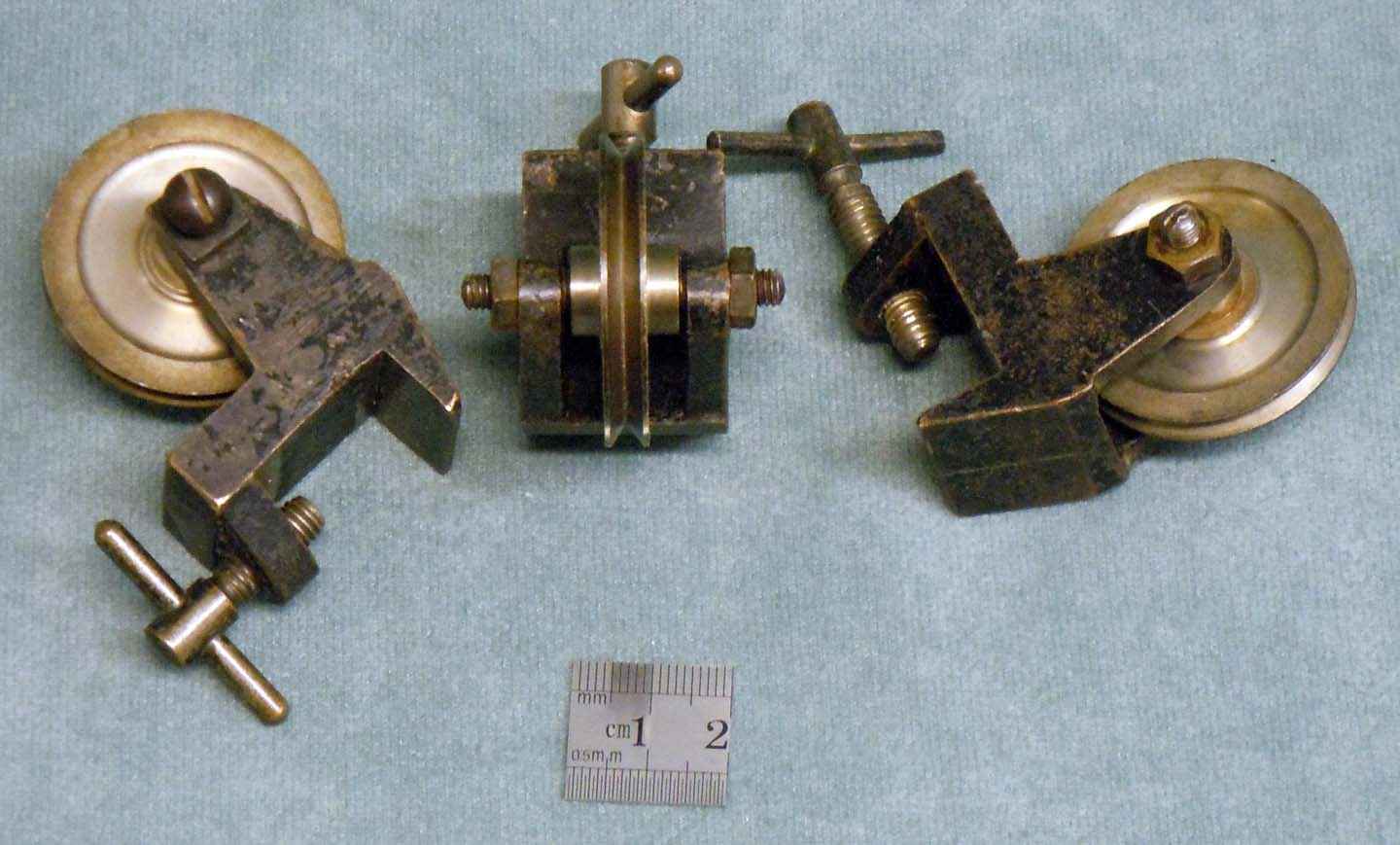
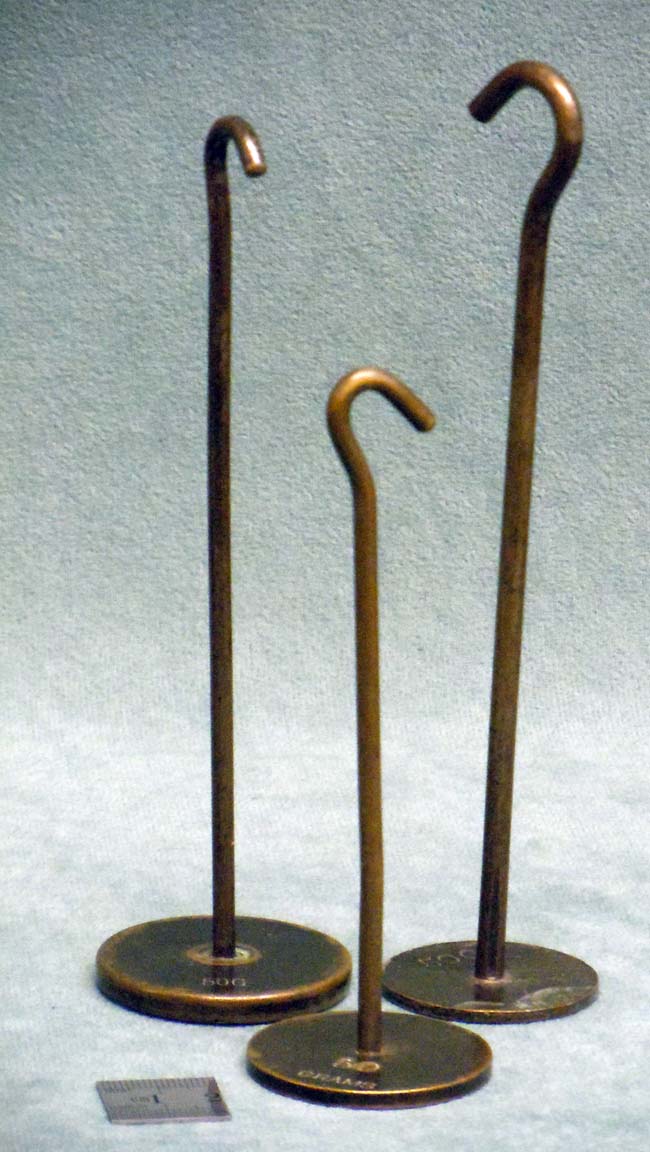
Three pulley assemblies are displayed with the force table, they may or may not be original to the table (they were the only three pulleys of this early style in the Physics Dept. inventory [donated 2012 when found during a stockroom cleanup]). Each assembly consists of a bronze casting, with index mark, finished in black enamel holding a nickel-plated pulley mounted with adjustable brass pivot-bearings (see photo of pulley assemblies). Three early 50 g weights and a black-enameled brass ring (all donated by the Physics Dept., 2012) are also displayed on the force table. As seen in the photo, each is somewhat different, one, originally black-enameled, has a hollow base filled with granular adjustment weights, the other two are solid brass, with most of the original nickel-plating now missing. The center post is a replacement metal rod.
The unfinished aluminum on the rim and edge of the plate were heavily corroded when the instrument was acquired. The corrosion was removed by rubbing with fine steel wool and Briwax, followed by polishing with a soft cloth. The painted surfaces were cleaned by vigorous rubbing with a cloth and Briwax, then polished with a soft cloth. There is some flaking of the crinkle finish on the plate, and some chipping of the enamel on the stand.
-
producer
-
Central Scientific Company, Chicago
-
Date Created
-
c. 1930
-
Is Part Of
-
Humboldt S-T-C
-
Subject
-
Force tables; vector addition; physics instruments; mechanics
-
Identifier
-
HUMBOLDT S-T-C 2689