-
Title
-
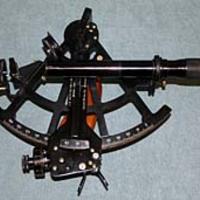
Micrometer Sextant, USN Mark II
-
History / Usage
-
The sextant is the iconic instrument for navigation, however its dominance is fairly recent and short lived. Its development was driven by the need to determine the longitude, and in particular by the “Longitude Prize” offered by the Board of Longitude in the early 18th century. Longitude is determined primarily by finding the local time compared to the time at a known location (today the Greenwich prime meridian). Before the development of precise reliable clocks for use at sea, astronomy provided a number of potential clocks, the most useful being “Lunar distances” or the distance between the Moon and a known star. The early instruments of celestial navigation (such as the mariner’s astrolabe, quadrant, cross-staff, and backstaff) by could successfully measure the altitude of the Sun or other celestial object compared to the horizon, but they were difficult or impossible to use for measuring the lunar distance. The reflecting octant (also called a reflecting quadrant) was invented around 1730 by Hadley and others to solve this problem. The octant could measure up to a quarter of a circle (90°), thus the name quadrant, but due to the reflection process only required an arc of an eighth of a circle (giving the name octant). The octant gradually became the dominant instrument, displacing other angle measuring navigational instruments by the end of the 18th century as production costs for this more complex but easier to use and superior instrument came down. The later development of the sextant occurred because important lunar distances often exceeded the 90° direct measuring capability of the octant.
Most octants were made of ebony, though brass octants became more common as the 19th century progressed. The octant was the workhorse navigational instrument up until the 20th century, with sextants, being more delicate and significantly more expensive, being reserved for determining lunar distances or other precise measurements. Improvements in technology and production methods brought prices down and “sextants” (measuring 120° or more) became the standard for the 20th century.
-
Description
-
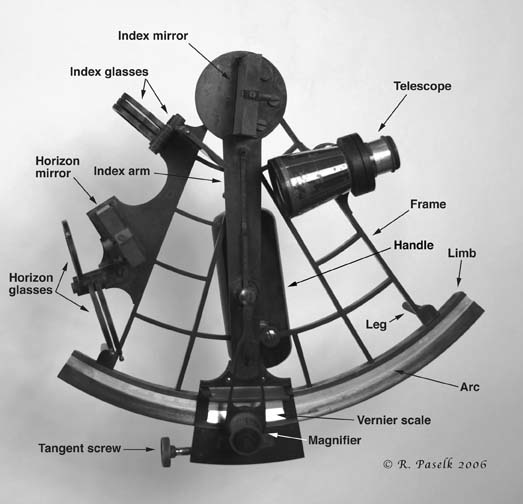
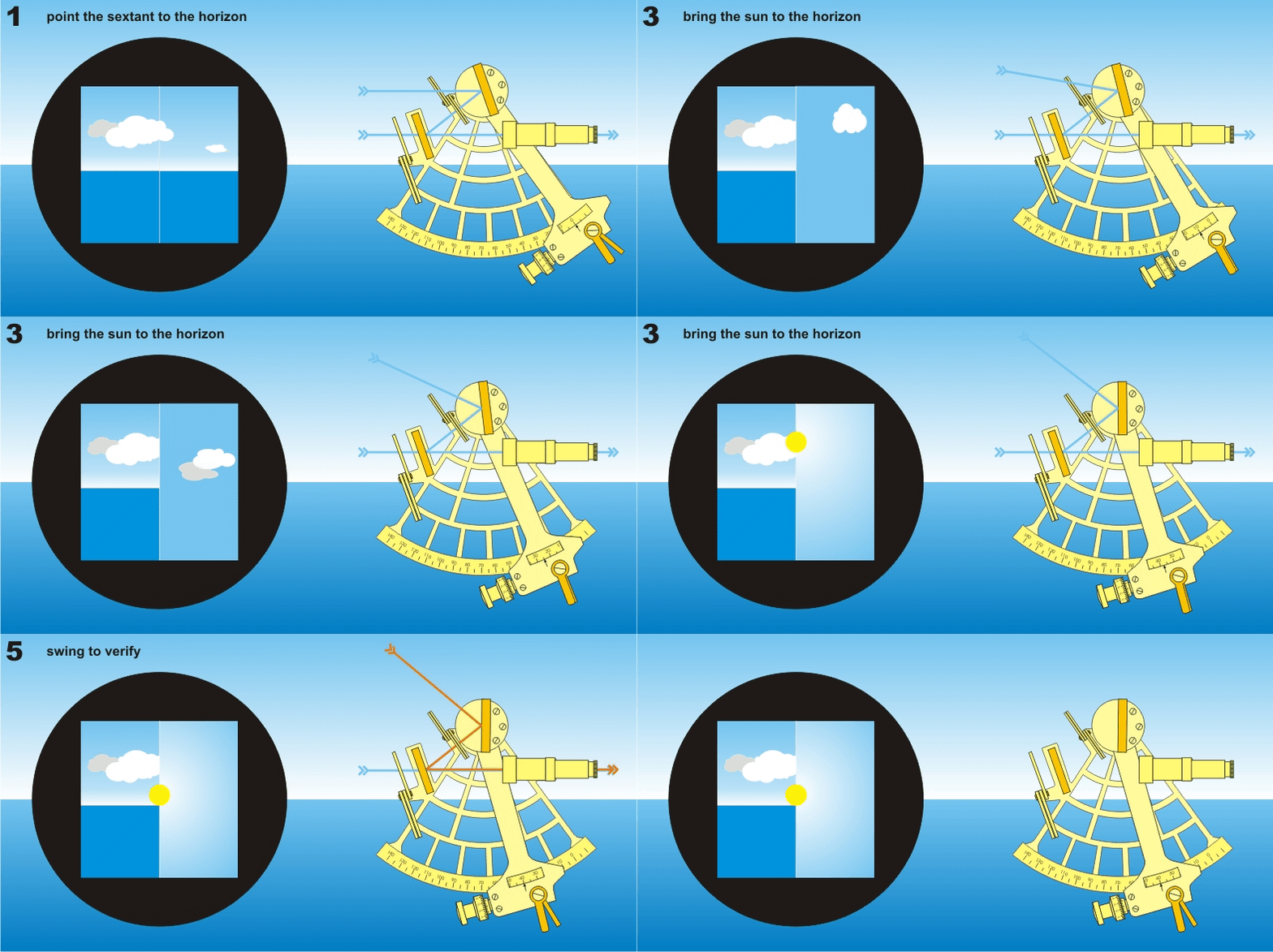
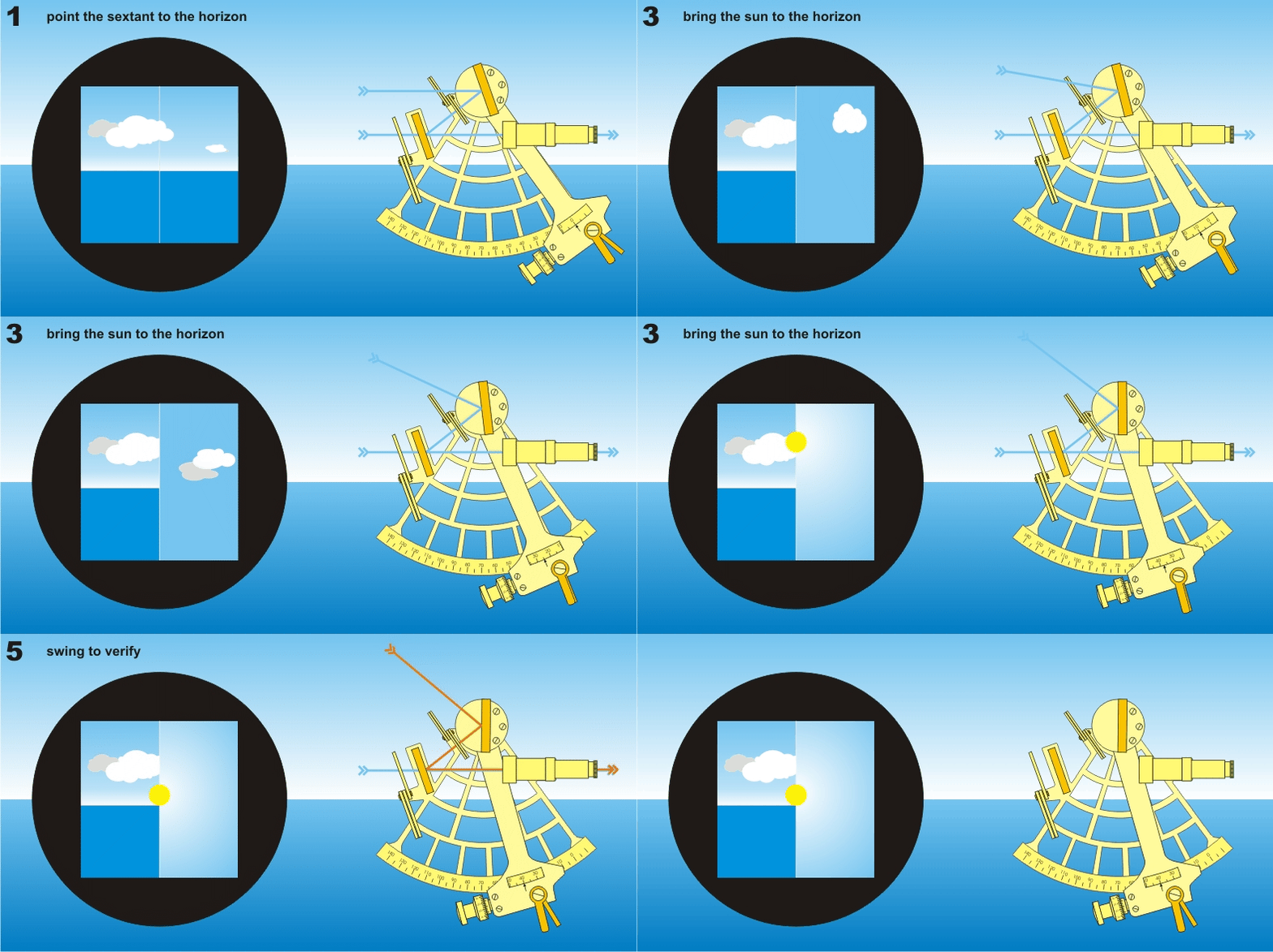
The modern navigational sextant is designed to precisely and accurately measure the angle between two points. In modern usage it is most commonly used to measure the altitude of a celestial object or the angle between a celestial object and the horizon. The sextant is so named because its arc encompasses one sixth of a circle (60°), however, due to the optical properties of the reflecting system it measures up to a third of a circle (120°).
This sextant was used to instruct oceanography students at Humboldt. When the sextant was transferred to the Museum in September 2010 there were a total of nine sextants in the Natural Resources stockroom.
-
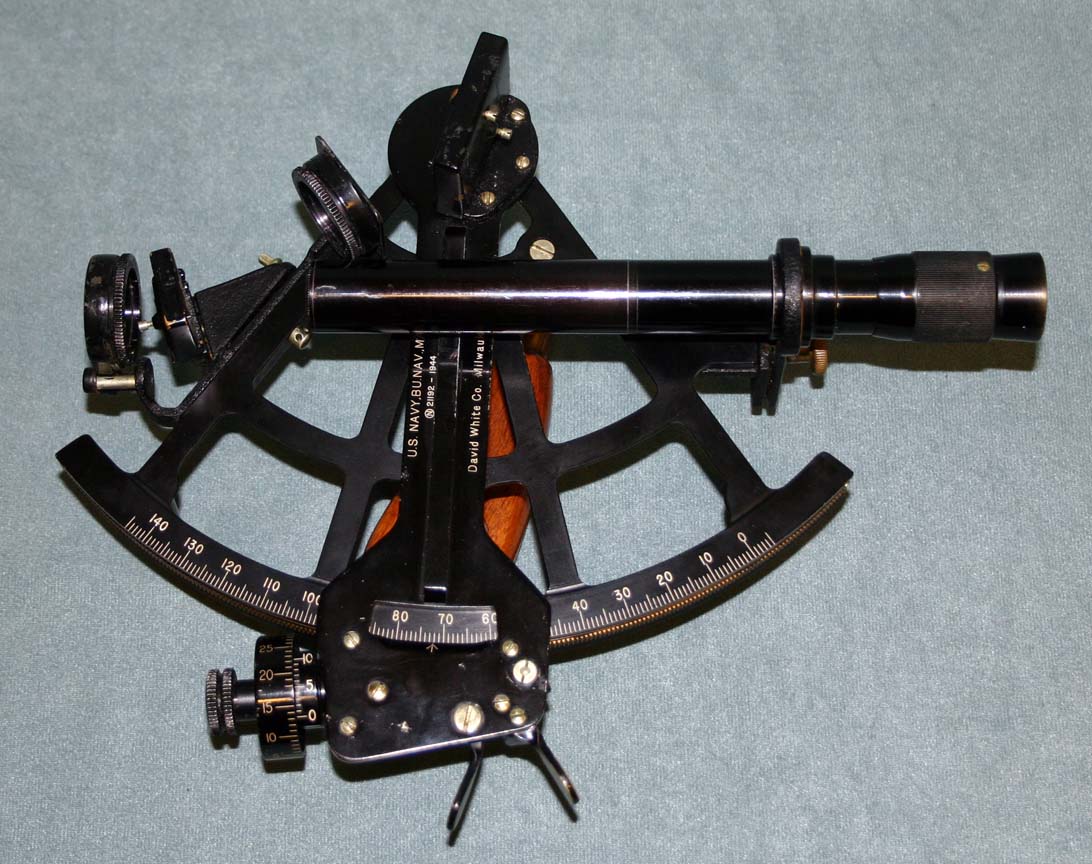
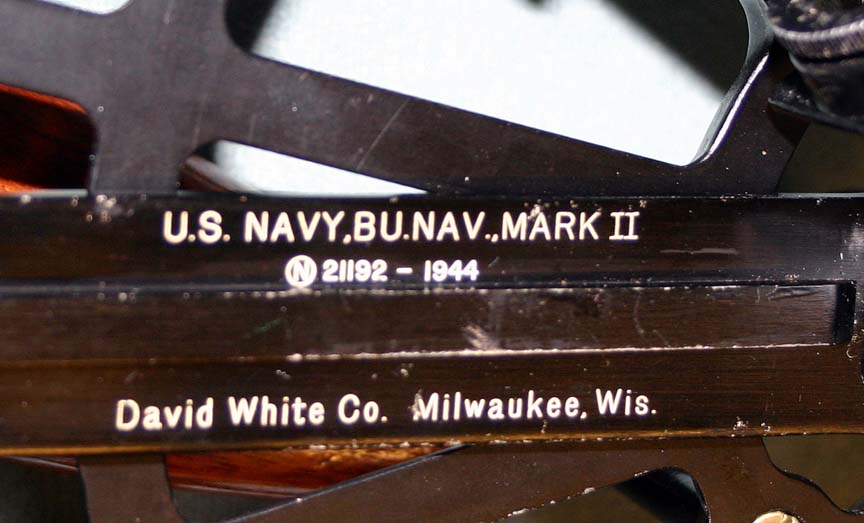
US Navy micrometer sextant, inscribed "U.S. NAVY, BU. NAV. MARK II (N) 21192 - 1944" and "David White Co. Milwaukee, Wis." (see closeup of logo). An apparently identical instrument is in the NMAH collection and is described and illustrated at: http://amhistory.si.edu/navigation/object.cfm?recordnumber=1273238
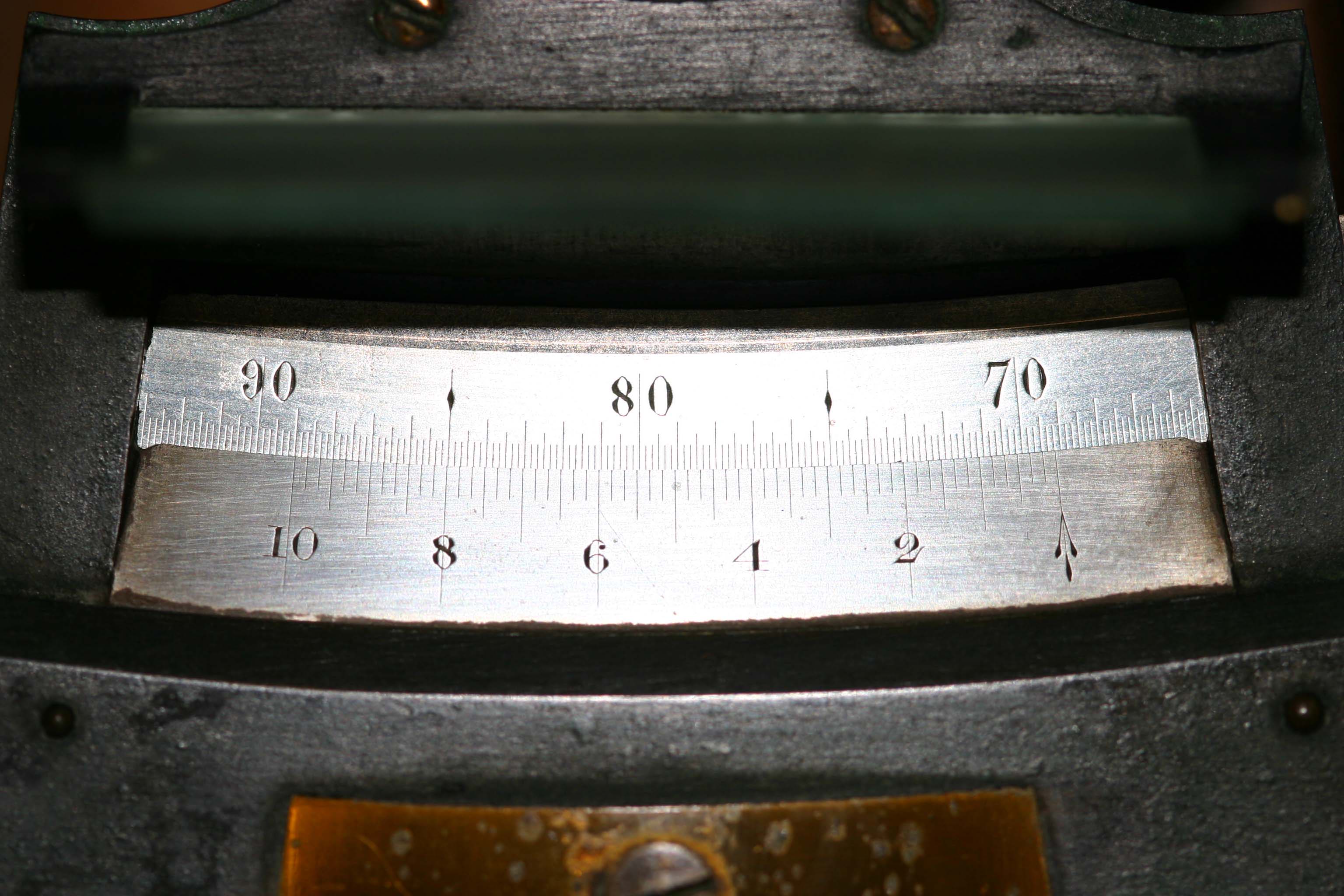
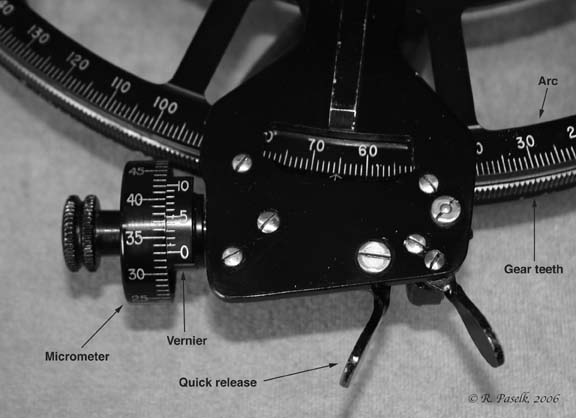
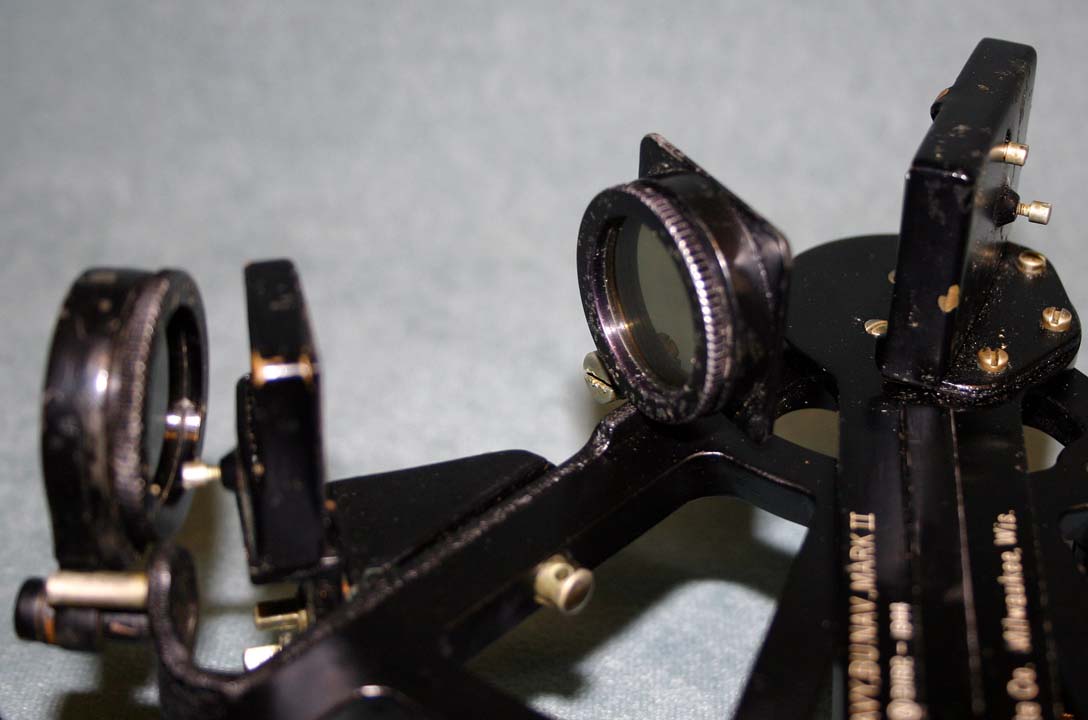
These instruments have a cast aluminum alloy frame with the 6.25 inch radius arc graduated on the limb from -5° to 145°. The micrometer reads directly to one minute of arc, wih a vernier reading to 0.1 minute = 6" of arc. The tapered micrometer drive worm is nickel-silver. The bronze arc/gear is attached to the limb beneath the arc with screws. There are single, 1" diameter, round variable-density (polaroid) index and horizon shades (filters - see detail image), each adjusted via a knurled ring, as seen in the image. The index arm and telescope are of aluminum. The legs and furniture are brass with nickel-silver screws etc. The handle is made of mahogany.
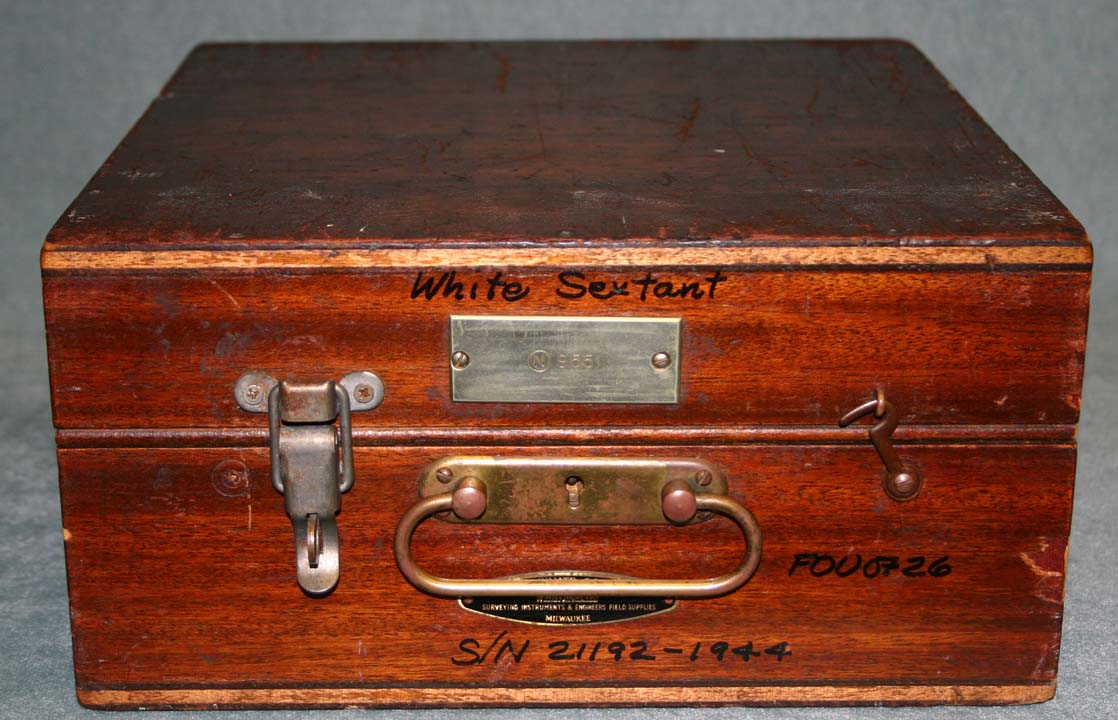
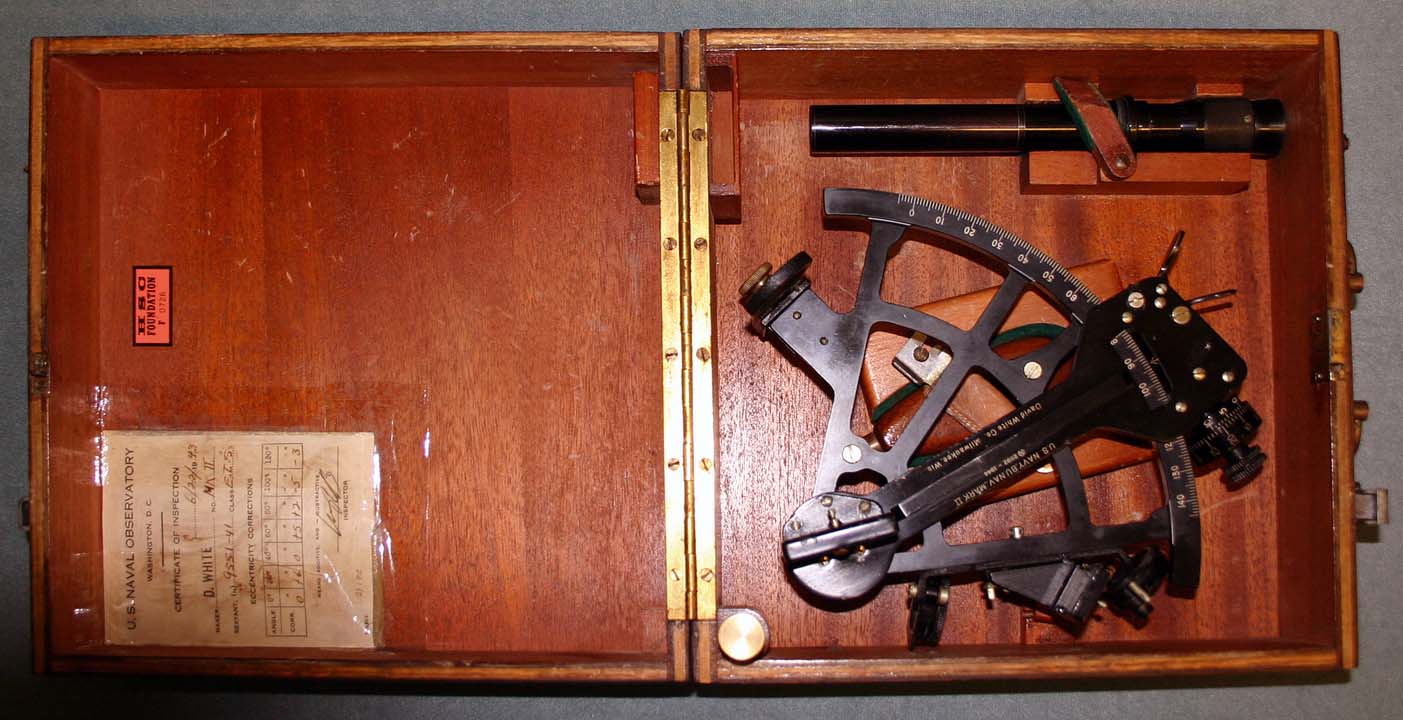
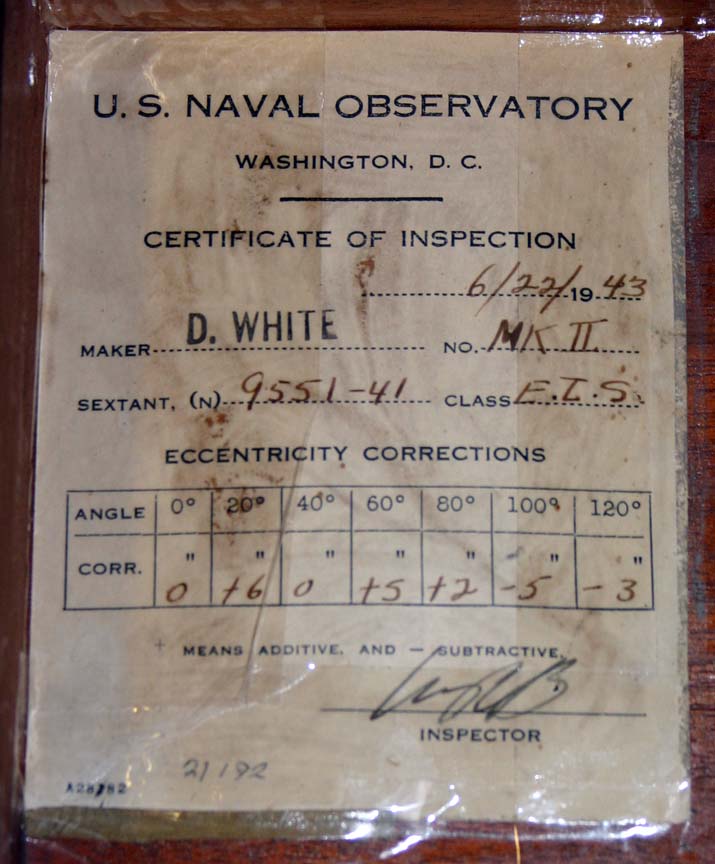
The 11.25" square by 5.5" deep box is constructed of 5/16" mahogany (see image of case and image of sextant in case) plywood with dovetailed corners. The 1/4" mahogany plywood top and bottom are attached with screws. There is a metal tag on the front of the case. The sextant case is not original to the sextant, but seems to be the box it arrived in at Humboldt since the sextant serial number is written on bottom of the certificate, as seen in the certificate image. There are places in the box for a spare mirror (missing) and adjustment tools (missing). A locking latch on the case is a replacement, probably added for greater security with student use than afforded by the simple hook and eye in the original.
-
References
-
Andrewes, William J. H. (ed). The Quest for the Longitude. The Collection of Historical Scientific Instruments, Harvard University, Cambridge (1996).
Cotter, Charles H. A History of the Navigator's Sextant.Brown, Son & Ferguson, Ltd, Glasgow (1983).
Ifland, Peter. Taking the Stars: Celestial Navigation from Argonauts to Astronauts. The Mariners' Museum, Newport News (1998).
Mörser Bruyns, W. F. J. Sextants at Greenwich. Oxford University Press , Oxford (2009).

 Micrometer Sextant, USN Mark II
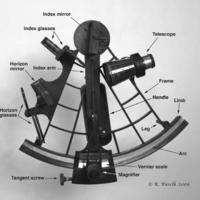 Labeled - Micrometer Sextant, USN Mark II
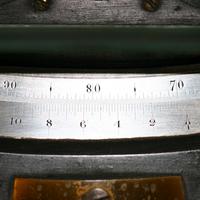 Measurement Scale - Micrometer Sextant, USN Mark II
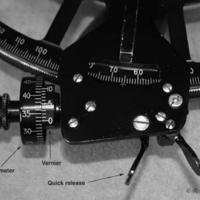 Labeled - Micrometer Sextant, USN Mark II
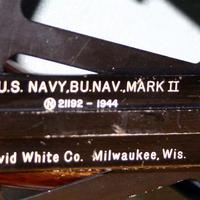 Logo - Micrometer Sextant, USN Mark II
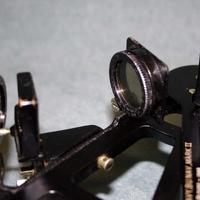 Lenses - Micrometer Sextant, USN Mark II
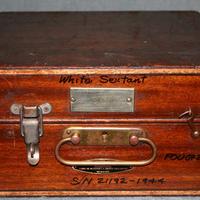 Closed Case (Front) - Micrometer Sextant, USN Mark II
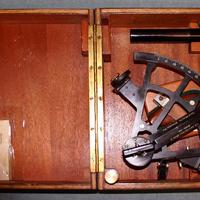 Opened Case - Micrometer Sextant, USN Mark II
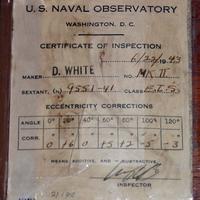 Certificate - Micrometer Sextant, USN Mark II
 Micrometer Sextant, USN Mark II
 Animated Gif - Micrometer Sextant, US Maritime Commission